
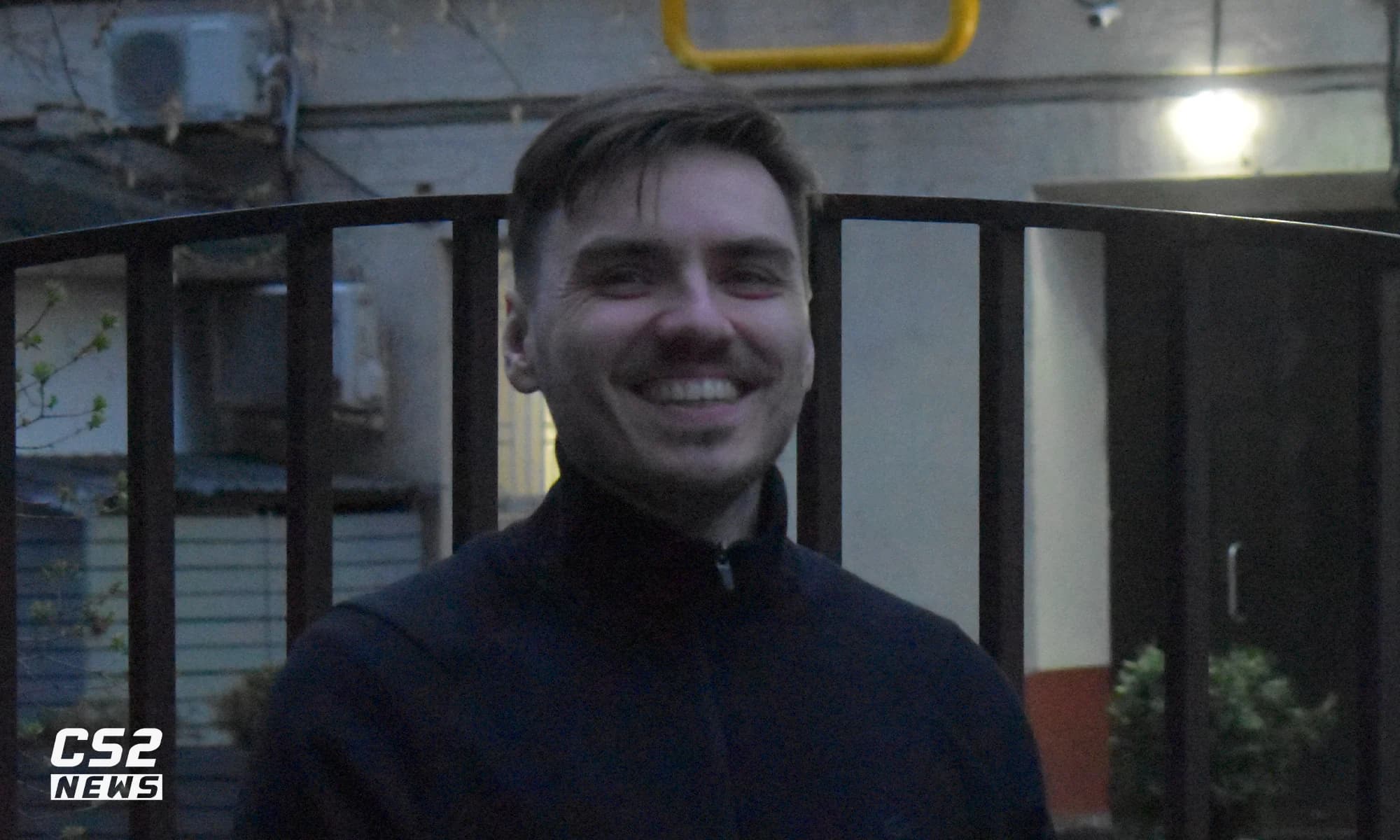
WINLINE MPKBK CIS LAN Season 5 was the first tournament Andrey MPKBK Ermakov had organized in St. Petersburg in four years. At RES Space, CS2NEWS spoke with him about bringing his LAN series back to the city, plans for another LanDaLan, the difficult sponsorship market, international tournaments under the VRS system, and the infrastructure helping CIS teams develop and find organizations.
Hi, Andrey! There is finally another LAN in St. Petersburg—four years after PARI White Night and several years of messages asking when you would return to the city. You often said that organizing a tournament in St. Petersburg was difficult because there were no suitable venues and because obtaining the necessary equipment was a problem. Judging by the fact that we are here now, have those issues finally been solved?
A venue appeared that, broadly speaking, meets all of our requirements. The people behind it have done a tremendous amount of work: they built several isolated gaming rooms, five in total. Their original goal was to hold tournaments here, and they got a lot of things right: four gaming rows and identical computers. They even planned an area on the third floor where people could watch the game and play on the sides at the same time. It does not work for us, though, because the players would be able to see the broadcast on the television. We were very fortunate that people like this appeared. As I understand it, the project is a difficult one. What we see here is not comparable to the usual gaming clubs in St. Petersburg—even in Moscow it is hard to find something like this. I do not know whether the venue is profitable, but I hope we can help them with that.
— MPKBK
Your previous LAN in St. Petersburg was PARI White Night back in the CS:GO era. If I remember correctly, the teams stayed at the Cosmos Hotel near Primorskaya?

The players stayed there, while the club itself was near Primorskaya. You came out of the metro and there was a three-story building right in front of you. The third floor was essentially a hookah lounge. That was where the tournament took place.
— MPKBK
We joked that, at this rate, the next St. Petersburg LAN would not take place until 2030. Now that you have found a suitable venue, are you planning to hold tournaments here more often?
Of course. The beginning of the year in Moscow was extremely busy. The club where I held two CIS LANs hosted around five LAN events in total. People get tired of the same place. The conditions there are different as well: the rooms are very small, and sometimes there is not even enough space for a manager. People and players get tired of travelling to the same venue over and over. Everyone is extremely happy here: first, they got to come to St. Petersburg, and second, the venue turned out to be very good. We will alternate between cities—that would be ideal. I hope we can find a third city as well. Everyone keeps mentioning Kazan. I understand that there are two potential venues there, but I first need to visit and inspect them.
— MPKBK
The most recent LanDaLan took place at the end of last year. PARIVISION won it and qualified for the StarLadder Budapest Major. So far this year, you have only held events from the CIS LAN series. Are you planning to bring LanDaLan back?
Of course. I think everyone knows what happened with the betting companies. You covered it very well, by the way—I learned about some of the new additional laws from you. The betting companies were hit very hard. They were the main driving force behind tournaments with live audiences. Obviously, I want to hold those events myself, but they are much more expensive. Even this event is dozens of times cheaper than LanDaLan. A large venue, lighting, and working with a big arena all involve an entirely different level of expense. I want to hold LanDaLan in the fall, around the Major. It may be a shortened format: instead of spending four full days at the venue, perhaps only one or two. We have to find a way to fit into the new economic conditions. But the event is in the plans.
— MPKBK
Many people were surprised that Majestic — the project best known for GTA RolePlay — became the title partner of the third LanDaLan. BetBoom was still involved with the tournament as well. Have any other unusual sponsors from different industries approached you?
Last year, yes. This year, it has been completely quiet. The betting companies were hit by targeted legislation: a higher tax burden and a requirement to process a bank transfer for every bet. Other sponsors were hit by ordinary VAT. Last year, we spoke with streaming services and several other companies. Now there is complete silence. The WhiteBIT cryptocurrency exchange joined us for one event. They appeared to like everything, but they ignored the next two proposals. For example, Winline approached me after its long-term sponsorship of Virtus.pro ended. The market is going to be shaken up considerably, but I think things will more or less settle down by the fall.
— MPKBK
Ahead of CIS LAN Season 4, you posted that BESTIA and Nenzhi had signed up for the tournament. Neither team ultimately attended. What happened?
Nenzhi turned out to be a fake registration. I eventually contacted the team directly and said, “Your manager is not responding to us.” They were surprised and said they could not attend because their schedule was extremely busy. Before the Major, BESTIA arranged a full European tour for themselves. They travelled to several LAN events in Romania and Denmark and wanted to fit our CIS LAN into that schedule. They were ready and had even paid the entry fee. Fortunately, we had a withdrawal deadline. In the end, they looked at the schedule and decided not to come after all. There would not have been any visa issues: Argentinians can enter Russia without difficulty. But I think they would have been “destroyed” here in competitive terms. They probably would not even have made it out of the group stage. The competition at our LAN events is extremely fierce. It would have been a new experience for BESTIA, and I think they would have been surprised by the form of the CIS teams.
— MPKBK
Speaking of international events, one of the most recent international LANs you organized took place in Serbia. How realistic is it to hold another international tournament outside Russia?
It is easier to do it in Serbia because many teams are willing to travel there. Relog Media is effectively the only tournament operator there that we can work with properly. Some new gaming clubs seem to be opening, but they are nowhere near the level we require yet.
— MPKBK
As I understand it, however, there are currently no talks about holding another international event of that kind. At the same time, CIS LAN events are becoming more visible on HLTV, and it feels as though larger teams might eventually be willing to attend. FaZe, for example, were once expected to attend BetBoom Dacha but ultimately did not come. How realistic is it to assemble an international field now?
It is no longer even about a particular organizer. Since the introduction of VRS, a tier-one event has to be announced two years before it actually takes place. You now also have to make arrangements with teams roughly two years in advance. If you were planning an event on the scale of PARI Please, even among the teams that currently attend tier-one events, we previously had FURIA, MIBR, and the Turkish roster that now represents Aurora. I effectively lost all of them because of the new rules. When the VRS system was introduced, I discussed it in detail with Spirit. We concluded that it was better not to get involved in that kind of project at all for the time being. We can slightly strengthen our current event and make it more attractive to Asian teams. The MongolZ, for example, are easier to secure than most other tier-one teams. Mongolia has a visa-free regime with Russia, they can travel here without difficulty, and many of the players even speak Russian. Chinese, Brazilian, and Argentinian teams can definitely come here—essentially all of South America and Asia. Chinese teams have already shown interest in one of the GLUCK events. Rare Atom wanted to attend together with another roster whose name I cannot remember now. It is considerably easier in Serbia. You can bring FaZe, Gentle Mates, and virtually every Brazilian team there. NiP may be more difficult because of their firm political stance. Travelling to Russia is more complicated and more expensive. Even ordinary flights to Moscow are not particularly appealing for teams right now.
— MPKBK
Looking at the broader picture, the CIS region is now developing its own LAN infrastructure. There is LanDaLan and CIS LAN, which could be described as its smaller counterpart. Teams pay an entry fee, compete, practice, and earn valuable VRS points. Could this system become an important positive case for the entire region in the long term?
Everyone already understands the possibility of qualifying for the Major. But over the course of the CIS LAN events, I have noticed that the infrastructure created around invitational tournaments is effectively saving many rosters. The clearest example right now is Virtus.pro. To achieve online what they accomplished with two wins at our LAN, they would probably have needed to grind for around three months, ideally winning some CCT events while also facing a huge number of teams, some of which are suspected of using radar cheats. Here they played only two series: they defeated the champions of our previous LAN and beat CYBERSHOKE, a team with a strong VRS position. As a result, they gained around 60 places in the ranking. In that respect, the VRS system is ideal. There are simpler examples as well. Many organizations effectively survive through our events. For instance, 33 produce their best results on LAN. That allows them to show their organization that they remain relevant and that they are a strong team. PsychoFace found an organization specifically for this LAN because they had registered and earned the chance to attend. This is neither the first nor the last example of participation in an event like this—and the resulting place in the VRS top 100—literally saving a roster. We may now be able to help ex-RUBY, for example. They want to attend LAN events but have not yet been able to find an organization. PsychoFace were fortunate in that respect. There are other strong rosters without organizations as well.
— MPKBK
So there are now more professional rosters than organizations willing to sign them. Are there enough teams to consistently fill complete tournaments?
There really are now more professional rosters than organizations. Ideally, I would like to have 16 teams capable of regularly attending events like this. Right now, if you scrape together everyone available, you get around 15. Two or three teams also skip LAN events from time to time. Nemesis, for example, decided to end their season and take a break this time. They had registered for our event but withdrew closer to the date.
— MPKBK
One final, broader question. The introduction of VRS significantly changed the entire competitive infrastructure. Previously, there were online and LAN RMR events that the whole community followed. Open qualifiers then appeared, but Valve later abandoned those as well. Everything has now effectively shifted toward the active development of local mini-LANs: Imperium, PARCIN, DraculaN, and other events that often run simultaneously during the final week before a deadline. Do you consider that a positive trend for viewers, players, and tournament organizers?
It is a very positive development. It has given many organizations a new lease of life. The only thing is that I think it will eventually be regulated more strictly. Dishonest organizers, or those who fail to meet certain requirements, may lose their VRS status.
— MPKBK
Valve may also begin intervening in the schedule so that nobody can abuse the system too aggressively by holding several LAN events in quick succession. I, for example, want to hold three LAN events. Strictly speaking, that may not be entirely fair, but while it is allowed, we will still make use of the system.